-
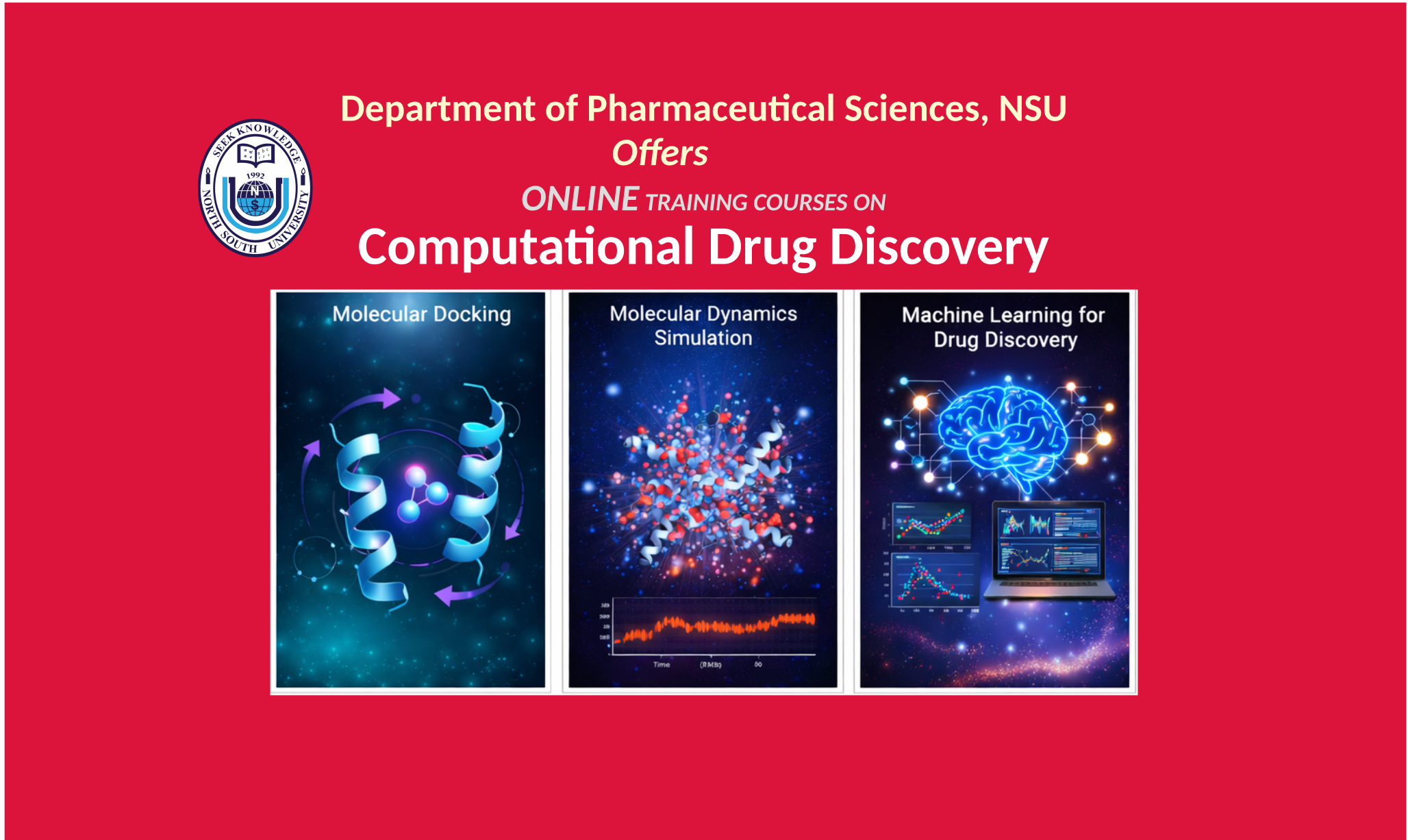
NSU offers Online Courses on Computational Drug Discovery
The Department of Pharmaceutical Sciences, North South University (NSU) is offering a series of approved online training courses on Computational Drug Discovery. These programs are designed to build practical, research-oriented skills in molecular docking, molecular dynamics, and machine learning–based virtual screening for students, researchers, and professionals.

-

AI Meets the Ocean: Discovering Novel RIPK1 Inhibitors from Marine Natural Products
A hybrid AI and molecular simulation approach has identified four promising RIPK1 inhibitors from marine natural products. By integrating machine learning, docking, and molecular dynamics, the study highlights new candidates targeting necroptosis—opening potential therapeutic avenues for neurodegenerative diseases, inflammation, and cancer.
-
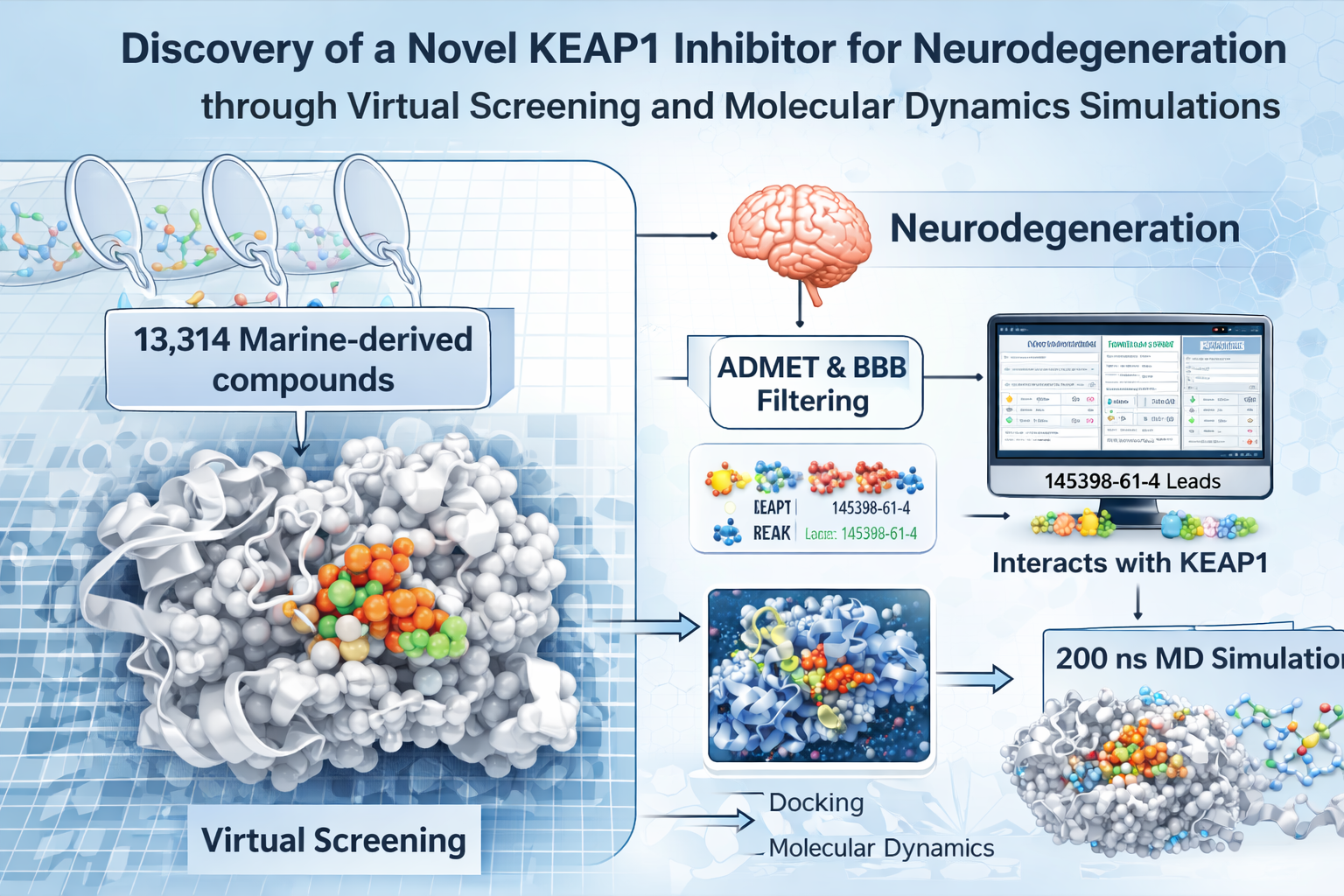
Virtual Screening Identifies a Novel KEAP1 Inhibitor with Potential for Neurodegenerative Disease Therapy
A recent study led by Professor Dr. Murad Hossain and published in PLOS ONE (February 2, 2026) reports the discovery of a novel KEAP1 inhibitor using an integrated computational drug discovery workflow combining virtual screening, molecular docking, molecular dynamics (MD) simulations, and free energy calculations.
-
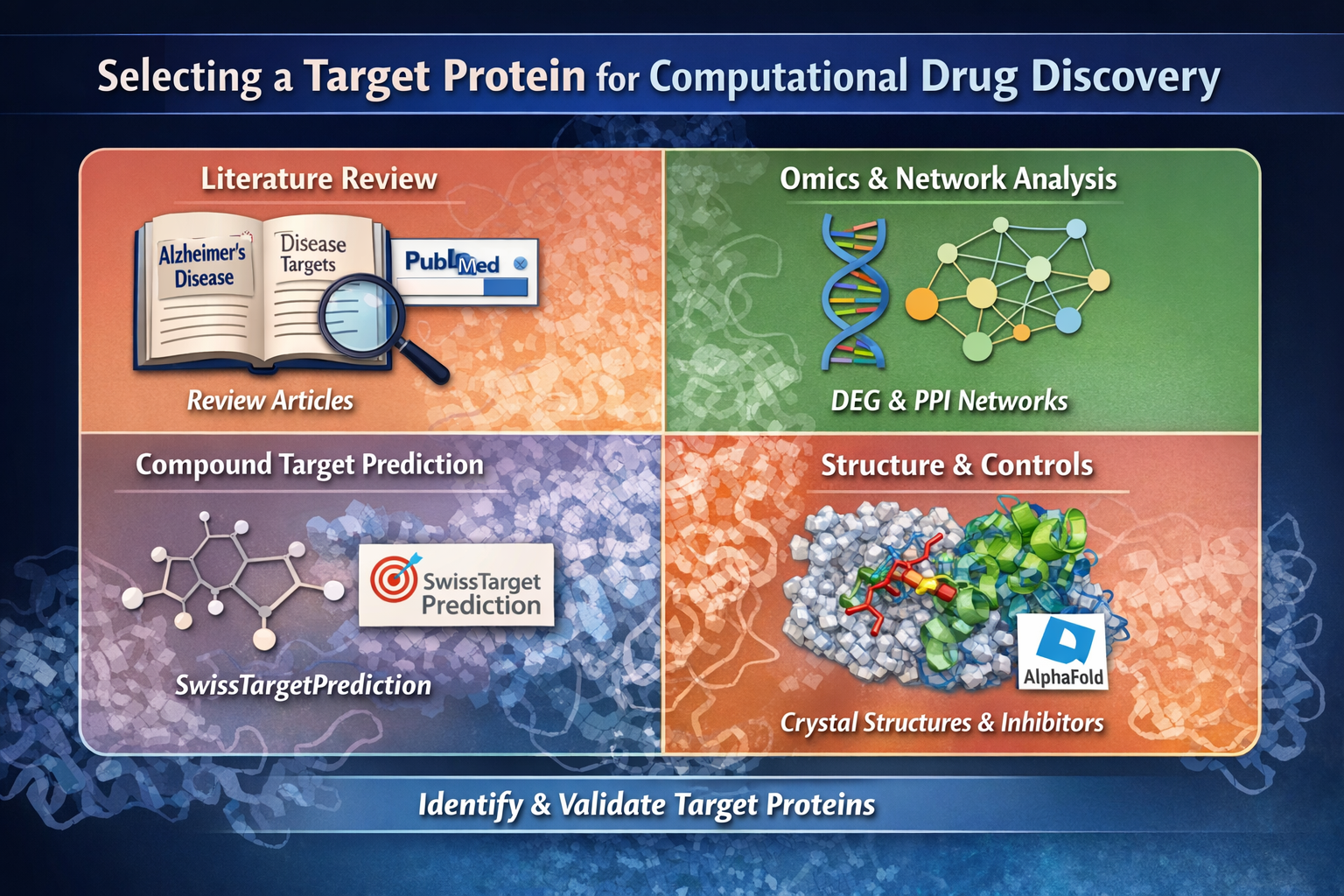
How to Select a Target Protein for Computational Drug Discovery
Selecting the right target protein is a critical first step in computational drug discovery. A well-chosen target increases the likelihood that virtual screening, molecular docking, and molecular dynamics simulations will yield meaningful and biologically relevant results. This tutorial introduces practical and beginner-friendly approaches to identifying and validating target proteins. The focus is on conceptual understanding,…
